
Odoo Quality Control: How to Reduce Product Defects in Manufacturing
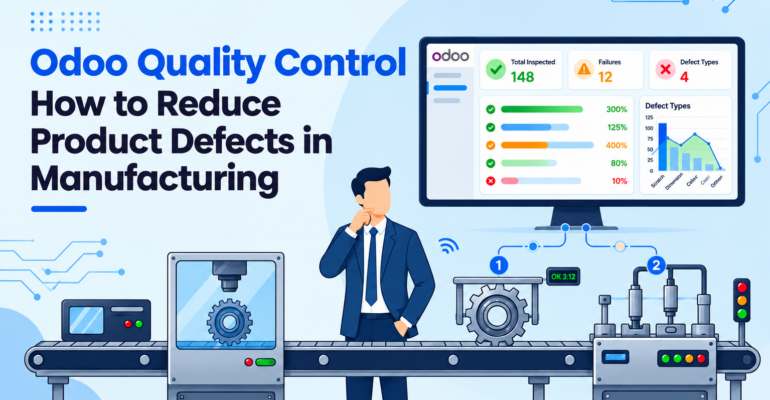
Odoo Quality Control: How to Reduce Product Defects in Manufacturing
 Bhargav A
Maintaining consistent product quality is one of the biggest challenges for manufacturing businesses. Odoo Quality Control helps manufacturers manage inspections, identify defects, reduce repeated rework, and improve product quality throughout production. By organizing quality checks and tracking issues, businesses can reduce material wastage, control operational costs, and improve customer satisfaction.
Common Quality Control Challenges in Manufacturing
Manufacturers may face several problems when quality checks are not properly integrated into their operations:
- Late defect detection: Issues are discovered after products have already been manufactured.
- Inconsistent inspections: Different employees may follow different inspection procedures.
- Higher production costs: Defective products require rework, replacement, or disposal.
- Limited issue tracking: Manual records make it difficult to identify recurring quality problems.
- Customer dissatisfaction: Poor product quality can lead to complaints, returns, and reduced trust.
These challenges can affect production schedules, increase waste, and make it difficult to maintain consistent product standards. A structured quality management process helps manufacturers identify problems earlier and take corrective action.
How Odoo Quality Control Helps Reduce Product Defects
1. Schedule Quality Checks at the Right Stage
Odoo allows businesses to configure Quality Control Points for selected manufacturing and inventory operations. These checks can be scheduled at important stages, such as component assembly, production, packaging, or final inspection.
For example, a furniture manufacturer can inspect product dimensions, surface finishing, and assembly quality before moving finished products to the next stage.
Benefit: Early inspections help identify defects before they affect later production activities or reach customers.
2. Inspect Raw Materials Before Production
Product quality depends on the quality of the materials used during manufacturing. If defective raw materials enter production, they can affect multiple products and increase material wastage.
Odoo Quality checks can be configured for incoming inventory operations, helping teams inspect materials before using them in manufacturing.
For example, a metal manufacturing business can check the dimensions and condition of incoming components against its quality requirements.
Benefit: Identifying unsuitable materials early can help prevent production problems, reduce waste, and avoid unnecessary rework.
3. Standardize Inspection Procedures
When employees follow different inspection methods, quality results can become inconsistent. Odoo supports different quality check types, including pass/fail checks, measurements, instructions, and picture-based checks.
Manufacturers can define inspection requirements according to their products and production processes. For example, a manufacturer producing precision components can record measurements and compare them with acceptable tolerance ranges.
Benefit: Standardized inspection procedures help employees follow consistent quality requirements and reduce the risk of overlooked defects.
4. Track Quality Issues with Quality Alerts
When a defect is identified, employees can create a Quality Alert to document the issue and bring it to the attention of the responsible team. Depending on the configuration, alerts can include details about the product, work center, issue, priority, and possible cause.
Quality teams can investigate reported problems, coordinate corrective actions, and review recurring issues instead of relying only on verbal communication or scattered records.
For example, if the same component repeatedly fails inspection, the team can investigate whether the issue is related to raw materials, machine settings, or the production process.
Benefit: Better issue tracking helps manufacturers investigate recurring defects and take steps to prevent similar problems.
5. Improve Coordination Between Production and Quality Teams
Quality control involves more than inspection alone. Production employees and quality teams need to communicate when a product fails a check or requires further investigation.
Odoo connects configured quality checks with relevant manufacturing and inventory operations. This helps employees access inspection requirements and record quality issues within their workflows.
For example, when a product fails an inspection, the responsible team can review the issue and determine the next action according to the company’s quality procedures.
Benefit: Better coordination can help reduce unnecessary rework, avoid delays, and prevent defective products from progressing through the workflow without review.
Key Business Benefits of Odoo Quality
By configuring Odoo Quality to match their production processes, manufacturers can work toward:
- Reduced material wastage: Identify quality issues before they affect more products.
- Improved product consistency: Follow standardized inspection procedures.
- Better defect tracking: Maintain organized records of quality issues and alerts.
- More efficient inspections: Define checks for relevant production and inventory operations.
- Improved decision-making: Use recorded quality information to investigate recurring problems.
- Better team coordination: Help production and quality teams respond to issues more systematically.
The actual results depend on inspection procedures, employee adoption, data accuracy, and the quality management processes implemented by the business.
Best Practices for Implementing Odoo Quality Control
To get more value from Odoo Quality, manufacturers should align the system with their actual production requirements.
- Identify critical inspection stages: Determine where quality checks are most important in the production process.
- Define clear quality standards: Establish measurable acceptance criteria for materials, components, and finished products.
- Train employees: Ensure teams understand how to perform checks and record issues correctly.
- Review recurring defects: Regularly examine quality alerts to identify areas that may need improvement.
- Review and refine workflows: Adjust inspection procedures as products, production methods, and business requirements change.
A practical implementation should focus on the quality checks that matter most to the business rather than adding unnecessary steps to every operation.
How Banas Tech Can Help with Odoo Quality Control
Every manufacturing business has different quality standards, inspection requirements, and production workflows. A properly configured Odoo system should support these requirements while keeping daily operations manageable.
At Banas Tech, we provide Odoo implementation, customization, development, and integration services to help businesses align Odoo with their operational needs. Our team can help assess existing workflows, configure suitable quality processes, and explore customized functionality where standard features do not fully meet business requirements.
You can also explore our related content on Odoo Manufacturing Resource Planning (MRP) and Custom Odoo Development for Manufacturing to learn more about improving manufacturing operations with Odoo.
Explore our Odoo Services to learn more about our solutions.
Ready to improve quality control in your manufacturing business? Contact Banas Tech to discuss an Odoo solution tailored to your business requirements.