
How Odoo Connects Manufacturing, Purchasing, and Inventory
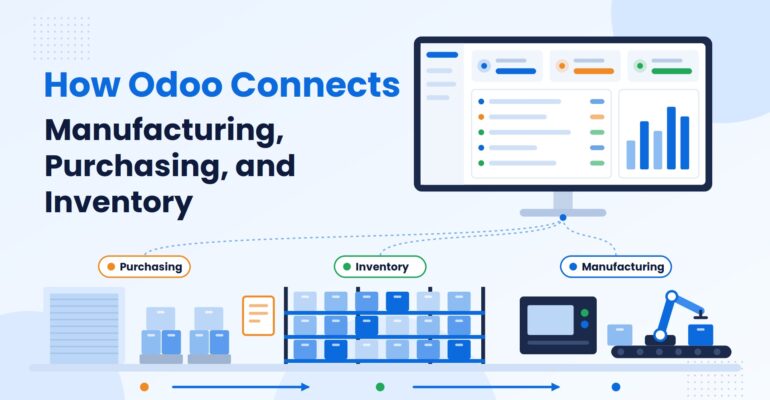
How Odoo Connects Manufacturing, Purchasing, and Inventory
 Bhargav A
Manufacturing businesses need more than an efficient production process to operate successfully. They also need the right raw materials, timely purchasing, and accurate inventory records. When these activities are managed separately, businesses may face material shortages, excess stock, production delays, and higher operating costs. Odoo ERP connects manufacturing, purchasing, and inventory in one integrated system, helping businesses coordinate daily operations, improve stock visibility, and make better planning decisions.
Why Do Manufacturing Businesses Need Connected Operations?
Manufacturing depends on the smooth flow of materials from suppliers to the warehouse and then to production. If one part of this process is delayed, the entire production schedule can be affected.
For example, a production team may be ready to manufacture a product, but the required raw materials are unavailable. The purchasing team may not know about the shortage until it becomes urgent, while inventory records may not reflect the latest stock movements.
These disconnected processes can lead to:
- Production delays caused by unavailable materials
- Emergency purchases and higher procurement costs
- Excess inventory and unnecessary storage expenses
- Manual data entry and inconsistent records
- Limited visibility into material requirements and stock levels
Odoo helps bring these activities together so teams can work with more consistent and accessible operational information.
How Odoo Connects Manufacturing, Purchasing, and Inventory
1. Manufacturing: Plan Production Requirements
Odoo Manufacturing helps businesses manage manufacturing orders and define the materials required to produce finished goods through a Bill of Materials (BoM).
When production is planned, teams can identify the components and quantities needed for each product. This information helps them understand material requirements before production begins.
Business benefit: Better production planning and fewer unexpected material shortages.
2. Purchasing: Procure Materials on Time
Once material requirements are identified, the Purchase module helps businesses manage vendor information, request quotations, and create purchase orders.
With suitable product and replenishment configurations, Odoo can help generate purchasing requests when additional materials are required. Purchasing teams can then review supplier availability and expected delivery dates before confirming orders.
Business benefit: More organized procurement, better coordination with suppliers, and improved purchasing visibility.
3. Inventory: Track Stock and Material Movement
The Inventory module helps businesses monitor raw materials, components, work-in-progress movements, and finished products.
As incoming receipts and internal stock movements are processed, inventory records can be updated to reflect the movement of goods. Teams can also use stock forecasts and replenishment rules to support material planning.
Business benefit: Improved stock visibility, more informed replenishment decisions, and better inventory control.
How These Three Modules Work Together
Consider a manufacturer that produces 500 units of a finished product. The production plan requires specific quantities of raw materials, but some components are not available in sufficient quantities.
With Odoo configured for the business workflow:
- Manufacturing identifies demand: The manufacturing order and Bill of Materials help determine the required components.
- Inventory checks availability: Available stock and forecasted quantities help identify material shortages.
- Purchasing supports replenishment: The purchasing workflow helps procure the required materials from suppliers.
- Inventory records incoming materials: The warehouse team processes receipts and updates stock records.
- Production moves forward: Once the required components are available, production can proceed according to the planned workflow.
The exact level of automation depends on the Odoo configuration, replenishment strategy, and business requirements. When these processes are set up correctly, teams can reduce manual coordination and manage material flow more effectively.
Key Benefits of Connecting Manufacturing, Purchasing, and Inventory
Integrating these operations through Odoo can help manufacturing businesses achieve several practical benefits:
- Better coordination: Production, purchasing, and warehouse teams can work with connected operational data.
- Improved material availability: Stock visibility and replenishment planning help teams identify shortages earlier.
- Reduced manual work: Configured workflows can reduce repetitive data entry and follow-ups.
- More controlled inventory: Businesses can make better-informed decisions about stock levels and replenishment.
- Greater operational visibility: Teams can review production requirements, purchasing activities, and stock information in one ERP environment.
The results depend on accurate data, appropriate configuration, and consistent use of the system.
How Banas Tech Can Help
Every manufacturing business has different production processes, purchasing policies, inventory requirements, and reporting needs. A standard ERP setup may need configuration, customization, or integration to support these requirements effectively.
Banas Tech provides Odoo services, development, and integration solutions to help businesses align their ERP systems with their operational workflows. From configuring relevant Odoo modules to developing tailored functionality, the right implementation approach can help connect business processes more effectively.
Explore our Odoo Services to learn how Odoo can support your business operations.
Looking to connect your manufacturing, purchasing, and inventory processes? Contact Us to discuss an Odoo solution tailored to your business needs.